With fuel prices stubbornly high across the UK, a small plug-in device called SynGas has been gaining attention among everyday drivers. We decided to test it ourselves.

If you drive a petrol or diesel car built after 1996, chances are you have an OBD2 port tucked under your dashboard. It's the same port mechanics use to read error codes. And a growing number of drivers are now plugging a small device into that port — not to diagnose problems, but to potentially improve how efficiently their engine burns fuel.
The device is called SynGas. It's a compact chip-tuning box that connects to your car's OBD2 port and communicates with the engine control unit (ECU). According to the brand, it may help adjust fuel mapping parameters over time, potentially leading to more efficient combustion.
We wanted to see whether there was anything to it — so we ran a 30-day test across three vehicles.
How does it actually work?
Modern cars rely on their ECU to manage fuel injection timing, air-fuel ratios, and combustion efficiency. Factory settings are calibrated to work across a wide range of conditions and driving styles — meaning they're rarely optimised for your specific vehicle and driving patterns.
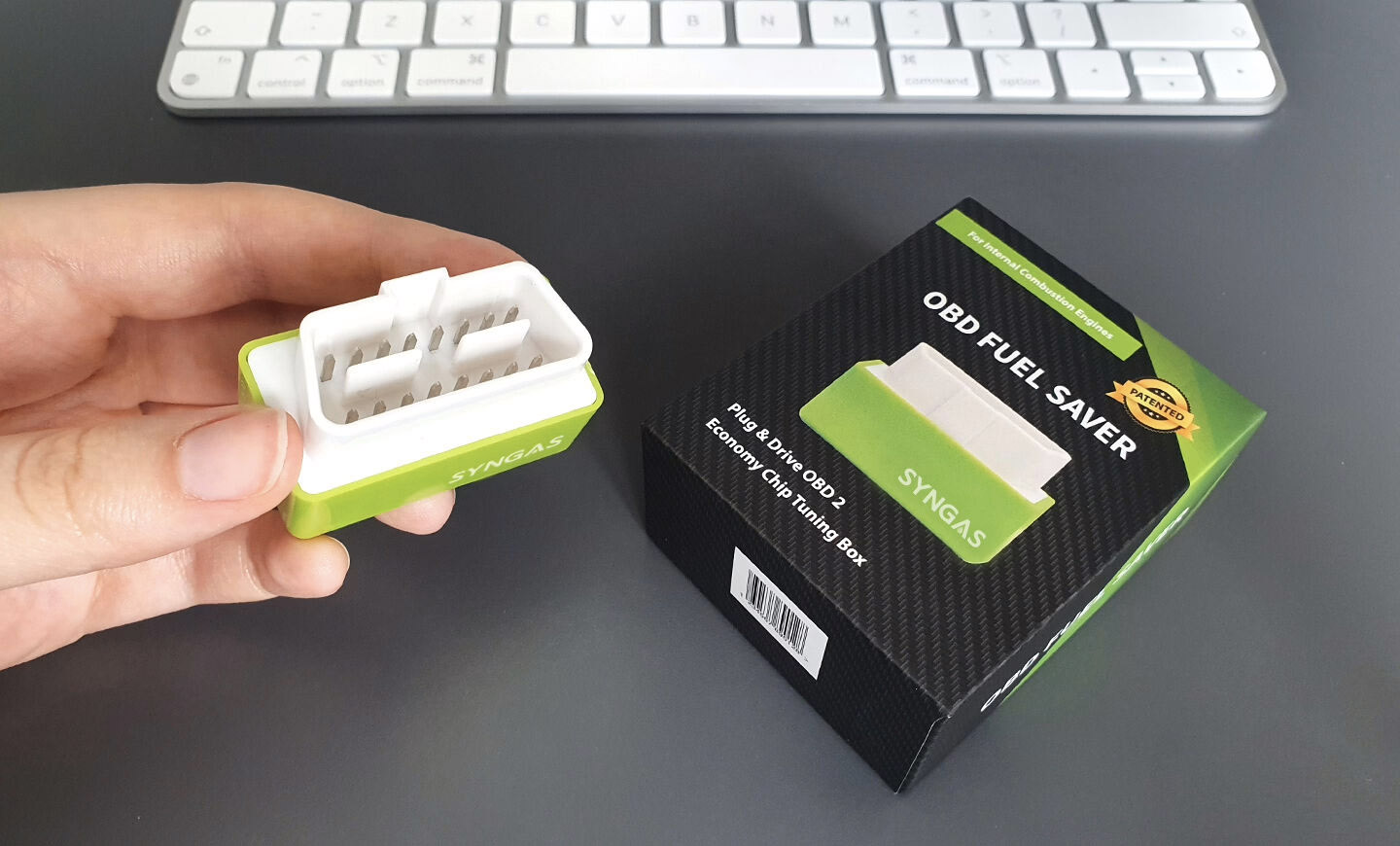
SynGas works by reading data from the ECU over multiple driving cycles and gradually adjusting fuel delivery parameters. The brand states that the device learns from your driving behaviour over approximately 95 miles of driving, after which point any potential fuel savings may begin to become noticeable.
It's worth noting that SynGas doesn't permanently modify your vehicle's software. If you unplug it, your car reverts to its original factory settings.
Our 30-day test
We installed SynGas in three vehicles: a 2017 saloon with a 1.6L petrol engine, a 2019 SUV running diesel, and a 2014 hatchback with a turbocharged 1.4L petrol. Each driver tracked fuel consumption using their trip computer and kept a log of fill-ups.
After 30 days: Two of the three test drivers reported what appeared to be a modest improvement in fuel economy on their regular routes. The third driver — who mostly does short city trips — noticed little difference. All three commented on how easy installation was.
These are, of course, individual observations and not a controlled laboratory study. Variables like weather, traffic patterns, tyre pressure, and driving style all affect fuel consumption. Individual results may vary.
What impressed us
Installation took under 60 seconds. You open your car door, locate the OBD2 port (usually under the steering column), and push the device in. No tools, no wiring, no mechanic appointment. One of our testers said his 12-year-old daughter could have done it.
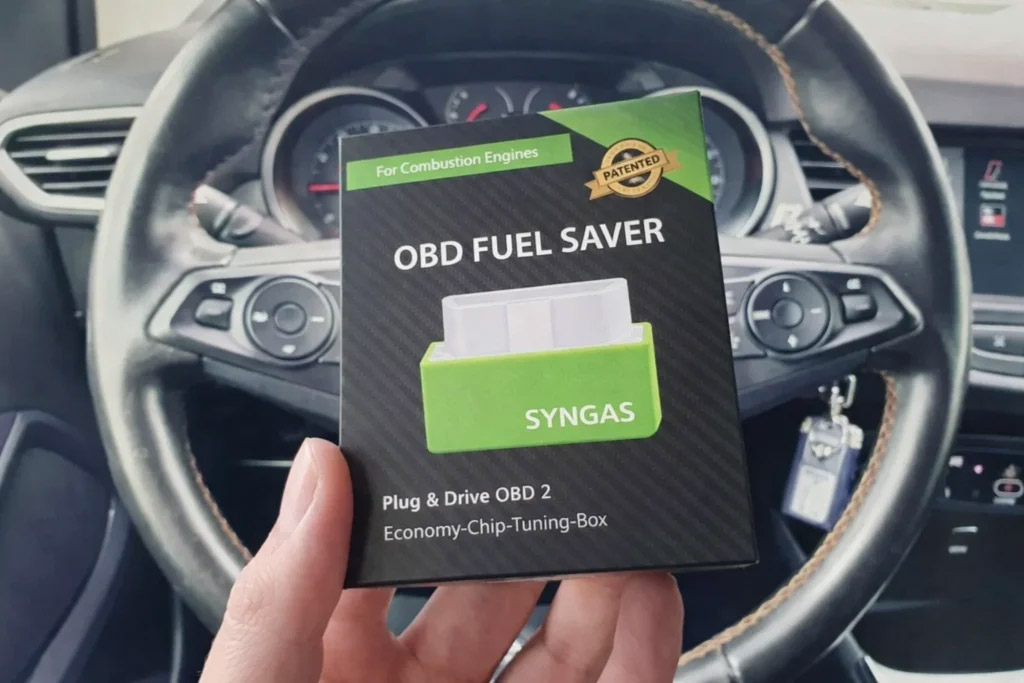
It's completely reversible. Unlike aftermarket ECU remapping, SynGas doesn't write to your engine computer. Pull it out and everything goes back to normal. However, we recommend checking with your vehicle manufacturer or dealer regarding the use of aftermarket accessories and any warranty implications.
It works with most cars. Any vehicle with a standard OBD2 port — which includes most UK cars registered from 1996 onward — should be compatible, whether you drive petrol or diesel.
Check UK Availability View today's UK offerWhat other drivers are saying
The following reviews reflect individual opinions and experiences. Individual results may vary. These testimonials are sourced from the official website and have not been independently verified.
Where to get SynGas
SynGas is available directly from the official SynGas website. It's currently not sold in retail stores.
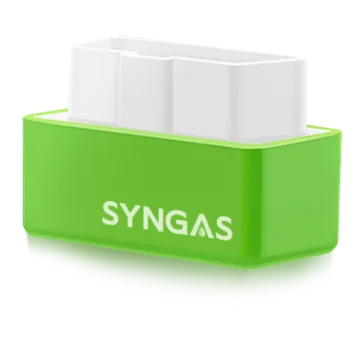
- Plugs into any standard OBD2 port
- Works with petrol and diesel vehicles
- No tools or mechanic required
- Compatible with cars from 1996 onward
- 30-day money-back guarantee
- Does not permanently modify your ECU
Our verdict
SynGas offers a simple, plug-and-play approach for drivers interested in whether OBD2 chip tuning could help with their fuel costs. Installation is effortless, it's fully reversible, and the 30-day money-back guarantee means you can try it with minimal risk.
We wouldn't call it a miracle device — no responsible reviewer would. But based on our own limited test and the feedback we've read from other drivers, some users do appear to notice modest differences in fuel consumption, particularly those who do regular motorway driving. As with any aftermarket device, individual results will depend on your vehicle, driving habits, and conditions.
If you're curious about whether OBD2 chip tuning could work for your vehicle, you can learn more on the official website. View today's UK offer →
Check UK Availability View today's UK offer